
Odd Lots

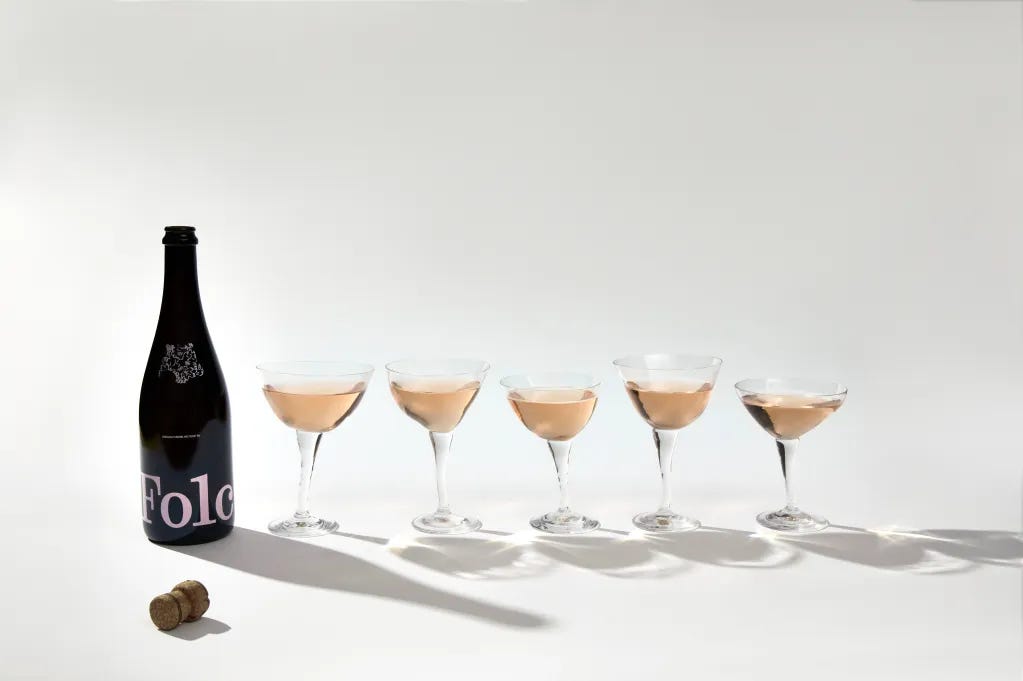
For some decades, the bibulous cognoscenti have spurned the Champagne coupe, viewing it as old-fashioned and philistine, believing it to be dysfunctional due to its wide surface dissipating the effervescence too quickly. Everyone has, more recently, been drinking the bubbly out of flutes.
The old-time coupe, though, had a certain romance. Its form, legend has it, was taken from Marie Antoinette’s left breast.
Everything old eventually becomes new again, and the coupe is making a comeback. So much so, that, in Britain, Folc, a wine-making company known for its Rosé, is trying to better the French Queen by offering a line of five Champagne coupes patriotically shaped upon the anatomies of several British damsels.
World Turned Upside Down department: Israel is now arming Germany.
Lydia Laurenson met Jeffrey Epstein twice. She found him impressive, but he also evidently creeped her out.
The International Court of Criminal Justice, a year ago, issued arrest warrants for Israel’s Prime Minister and Minister of Defense for “genocide.” Donald Trump is doing something in response, and there is a key difference. His actions have effects.
Arnaud Bertrand:
”Le Monde has a long article describing the hellish life of Nicolas Guillou, a French judge at the ICC in The Hague, due to U.S. sanctions punishing him for authorizing arrest warrants against Netanyahu and Gallant for war crimes in Gaza. Guillou’s daily existence has been transformed into a Kafkaesque nightmare. He cannot: open or maintain accounts with Google, Amazon, Apple, or any US company; make hotel reservations (Expedia canceled his booking in France hours after he made it); conduct online commerce, since he can’t know if the packaging is American; use any major credit card (Visa, Mastercard, Amex are all American); access normal banking services, even with non-American banks, as banks worldwide close sanctioned accounts; conduct virtually any financial transaction. He describes it as being “economically banned across most of the planet,” including in his own country, France, and where he works, the Netherlands.”
Donald Trump often makes real Americans smile.
Keeping up with the times is important: In Italy, the Mafia is using social media to recruit new blood.
Ever been to Carmel, California? Carmel does a great job of epitomizing the haute bourgeois ethos California-style. Not altogether surprisingly, Carmel recently banned the rising game of pickleball.
The Delphic Oracle says:
The coupe has one of those delightfully muddled histories where myth struts around pretending to be fact, and the truth is sneakier and more interesting.
The familiar legend insists the bowl was modeled on the breast of Marie Antoinette—or, depending on the storyteller, Madame de Pompadour. Cute story. Zero evidence. Pure 19th-century fantasy invented by people who liked their glassware with a saucy backstory.
The real origin sits in the early 18th century. French glassmakers were already producing shallow, broad-bowled wine glasses for sweet and sparkling wines long before the fluted style existed. The earliest printed references to a “coupe” for champagne date to the 1720s–1740s—when champagne was still often drunk more like a sweet, still wine. The bubbly stuff we think of as modern champagne didn’t get fully stabilized until later in the century.
The coupe’s shape makes immediate sense in that older era. Big bowl: let aromas disperse. Wide opening: release the aggressive fizz of early, less-refined champagnes. No one was worried about preserving bubbles with scientific efficiency; they were worried about not having the cork take out an eye.
The funny twist is that by the late 19th and early 20th centuries—after winemaking improved and carbonation became more deliberate—the coupe stuck around mostly because it looked glamorous. Think Belle Époque Paris, Art Deco hotels, Hollywood golden age. It photographed beautifully. It stacked beautifully in those ridiculous champagne towers. And etiquette guides praised it for being “seductive,” which is not a metric we use in glass engineering today.
I've never visited Carmel. It must be a tiny village if one can't escape the sound of pickleball paddles anywhere within its boundaries.